

Goh Skin Research Group at Universiti Sains Malaysia, Malaysia
Choon Fu Goh is an Associate Professor of Pharmaceutical Technology in the School of Pharmaceutical Sciences at Universiti Sains Malaysia (USM), Penang. His research expertise centres on the formulation design and characterisation of cutaneous (topical and transdermal) and mucosal drug delivery systems. He currently serves as Co‑chair of the International Chapter Committee of the Controlled Release Society (CRS) and Vice President of the Malaysia Local Chapter of CRS (MyCRS). He also sits on the Editorial Boards of several international journals, including the European Journal of Pharmaceutics & Biopharmaceutics and the Journal of Pharmaceutical Analysis.
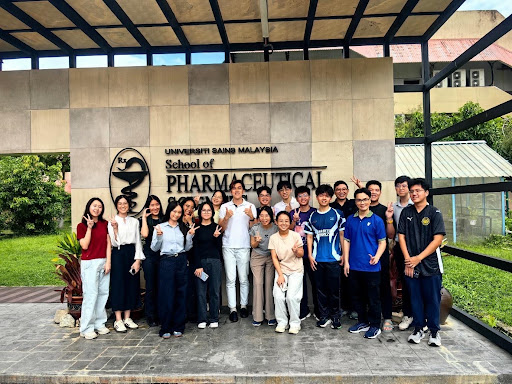
His scientific contributions have been recognised through numerous distinctions, notably the CRS Transdermal Kydonieus Foundation Award (2026), the TienTe Lee Biomedical Foundation Excellent Scientific Paper Award (2026), and the JPA Prize 2025 – Excellent Young Editorial Board Member (2026). He has also been recognised for his innovation in sustainable biomass‑derived hydrogels, winning a Gold Medal at the Malaysia Technology Expo in 2024 and securing the Second Runner‑up position for the Crown Prince CIPTA Award in 2021. He leads the Goh Skin Research Group at USM, which provides active mentorship to PhD candidates, Master’s students, undergraduate researchers, and international visiting scholars
Current Research Highlights
His research group is dedicated to advancing sustainable biomaterials and cutting‑edge technological platforms to address complex challenges in topical and transdermal delivery, with particular relevance to the Malaysian context. A major research thrust involves transforming non‑woody biomass such as kapok seed fibres, oil palm residues, and durian rinds into sustainable cellulose hydrogels and nanocrystalline cellulose for dermal drug delivery and wound‑care applications.
The group also develops advanced delivery systems, including nanoparticles, electrospun fibres, and microneedles, to overcome the formidable barrier properties of the skin. These platforms are applied to novel locally sourced compounds such as mitragynine and palm tocotrienols. In selected projects, machine‑learning approaches are integrated to elucidate formulation behaviour and guide rational design. The laboratory’s research direction is further shaped by emerging 3D‑printing technologies, which are currently being explored for the fabrication and optimisation of microneedles and hydrogel‑based systems.
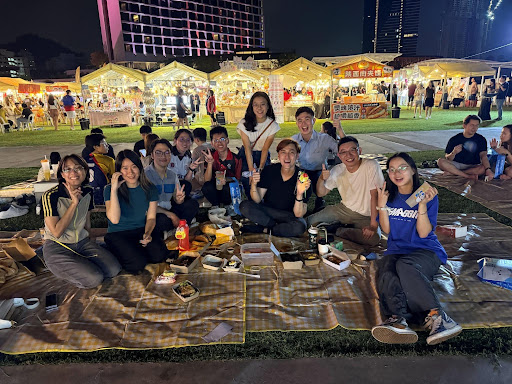
Beyond research, his group places strong emphasis on international collaboration and public engagement. The laboratory maintains active partnerships with institutions in the United Kingdom, Europe, Australia, China, Thailand, Japan and Indonesia. It also contributes extensively to science communication, public health education, and professional development through CRS, MyCRS, International Pharmaceutical Federation (FIP), International Pharmaceutical Students Federation (IPSF), and various community outreach initiatives.
Relevant References
- L.C. Wong, C.Y. Chin, H.X. Tan, R.R. Ong, B.-K. Khor, V. Murugaiyah, C.P. Leh, C.F. Goh, Kapok cellulose hydrogels for dermal applications: mechanistic insights into the interplay of cellulose loading and alkali solvent composition, Cellulose, (2026).
- X.Y. Liew, J.Y. Lee, J.Y. Ong, Y.Y. Tham, E.D. Yeoh, M.A. Osman, C.F. Goh, Machine learning-driven insights into the mechanical performance of polymeric microneedle array patches, Journal of Controlled Release, 390 (2026) 114505.
- Y.S. Sim, J. Azizi, N.J.-Y. Chear, S.R. Yusof, V. Murugaiyah, S.Y. Teh, C.F. Goh, In vitro skin permeation of mitragynine: Optimisation of antioxidants for enhanced drug stability and formulation performance, Drug Delivery and Translational Research, 15 (2025) 4202-4216.
- J.Y. Lee, S.H. Dong, K.W. Ng, C.F. Goh, Assessing the integrity and mechanical properties of commercial microneedles: innovation or fad?, Drug Delivery and Translational Research, 15 (2025) 3986-4003.
- Y.S. Sim, L.C. Wong, S.C. Yeoh, A. Almashhadani, B.H. Alrimawi, C.F. Goh, Skin penetration enhancers: Mechanistic understanding and their selection for formulation and design, Drug Delivery and Translational Research, 15 (2025) 3864-3898.
- L.C. Wong, C.P. Leh, C.F. Goh, Designing cellulose hydrogels from non-woody biomass, Carbohydrate Polymers, 264 (2021) 118036.