
PhD Candidate
School of Pharmaceutical Sciences of Ribeirão Preto (FCFRP), University of São Paulo (USP), Brazil
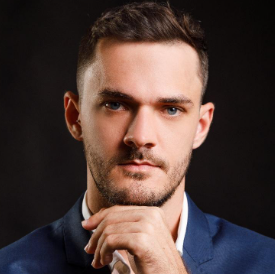
Bryan Wender Debiasi is currently completing his PhD at the School of Pharmaceutical Sciences of Ribeirão Preto (FCFRP), University of São Paulo (USP), Brazil, where his doctoral research has generated a patent currently in the process of filing. His work focuses on the development of liquid-crystalline nanodispersions for mRNA delivery as an innovative platform for gene-based vaccination, advancing the design of lipid-based nanocarriers with emphasis on ionizable lipids to optimize RNA encapsulation, endosomal escape, intracellular delivery, and modulation of immune responses.
Bryan holds a Bachelor’s degree in Pharmacy from the Federal University of Mato Grosso (UFMT) and a Master’s degree in Environmental Sciences (UFMT), where he built a strong foundation in pharmacotechnics and nanostructured systems. Throughout his academic trajectory, he has concentrated on translational nanotechnology and advanced delivery systems for RNA therapeutics and vaccines.
He has authored over 10 peer-reviewed international publications and contributed to more than 40 presentations at national and international conferences. His scientific work has been recognized with six research awards and multiple merit distinctions. He is also a recipient of the competitive CRS Travel Grant, supporting his participation in the Controlled Release Society Annual Meetings, where he has presented award-recognized research.
Bryan conducts his research at the NanoGeneSkin Laboratory (USP–Ribeirão Preto) under the supervision of Professor Maria Vitória Lopes Badra Bentley. His doctoral research integrates physicochemical characterization, in vitro and in vivo functional evaluation, and immunogenicity assessment to advance next-generation mRNA vaccine platforms.
An active member of the Controlled Release Society (CRS), Bryan serves on the Young Scientist Committee (2024–2027) and as Academic Representative of the Gene Delivery and Gene Editing (GDGE) Focal Group (2024–2025). Through these roles, he contributes to scientific exchange, interdisciplinary collaboration, and the professional development of early-career researchers within the global drug delivery community